

Skip to content
Colour & Code

AI Implementation:

AI, done properly, in a business like yours.

We take the AI thing you've been circling and make it work: connected to what you already run, used by your people, and answerable to a person.

what we actually do:

We make AI make sense for your business.

Good answers have become cheap. Any business can ask AI for a plan, a draft or an analysis and get something useful in seconds. What hasn't become cheap is knowing which answers to act on, and living with what follows. So we don't start with the technology. We start with your business: what it does well, what slows it down, what its people know, and what you're trying to build.

Where it usually startsAn owner, most weeks

We know AI could help us. We don't know where to start, and we don't want to break the things that work.

  1. Understand

    We start with your business, not a tool.

    How the work actually happens, what your people know, where the days get stuck, and what's worth fixing first. Some of it will be a job for AI. Some of it won't, and we'll say so.

  2. Map

    We map your business with you.

    Together we set out what your business deals with and how it connects: properties and tenants for one client, stories and advertisers for another. Yours will be your own.

  3. Connect

    Your everyday information keeps it current.

    Email, calendars, documents, accounting and the systems you already run feed the map as the work happens, so it fills in and stays up to date without anyone re-typing anything.

  4. Ask

    It asks when it needs a person.

    Most of what comes in is sorted on its own. When it can't place something, finds a conflict or needs a decision, it asks the right person in one inbox, and learns from the answer.

  5. Use

    An assistant that knows your business.

    Your team asks it in plain words and it answers from your own information, with a portal, reports and dashboards built on the same data.

  6. Train

    Your people use it, and a person stays in charge.

    We train your team inside their real work, and set it up so anything that reaches a customer or makes a decision goes through a person first.

The answer is cheap. The consequence is not. We build so that a person stays responsible for what happens next.

the technology:

Technology comes after understanding.

We don't begin with a collection of AI products and look for places to install them. We begin with what your business has to understand, connect and carry, and build one assistant that does it.

Assistant
  1. Knowledge Base

    Your business already remembers everything, just scattered across documents, inboxes and a few people's heads. This holds it in one connected place, and keeps track of who is allowed to see what.

    Ask us about this
  2. Enrichment

    A new message rarely makes sense on its own. This joins it to the conversation it came from and the promise that came out of it, so nobody starts from nothing.

    Ask us about this
  3. Triage

    More arrives each day than anyone can read properly. This works out what deserves attention, and hands anything unusual to a person rather than guessing.

    Ask us about this
  4. Work Planner

    Good decisions get lost between the meeting and the doing. This turns the decision into the tasks and follow-ups that carry it through.

    Ask us about this

Four parts, one shared understanding of your business. Not held by whoever happens to know, but available to everyone who needs it.

responsibly, which means:

Every advantage comes with a bargain. We make them on purpose.

Almost every advantage AI creates produces a tension somewhere else. Speed in exchange for what? Efficiency at the expense of whom? Knowledge captured from whom, and for whose benefit? These are the bargains inside every AI project. Here is how we make them.

  1. Speed in exchange for what?

    We tell you when AI is the wrong answer.

    Some problems are a process problem, or a people problem. We say so, even when it costs us the work.

  2. Answers, but who answers for them?

    A person stays accountable for anything that affects a customer.

    AI can take part in a decision. It can't look someone in the eye. That part stays with your people.

  3. Knowledge captured from whom, and for whose benefit?

    Your data stays yours, and stays where it's allowed to be.

    We know what the system can see and who can see it, and we can show you.

  4. Convenience instead of what?

    Nothing answers your customers unsupervised until it has earned it.

    It drafts, a person sends, and the leash gets longer only as the record gets better.

  5. Efficiency at the expense of whom?

    The people doing the work help change it.

    Your staff know where the friction is. They also know what it's like to be asked for reasons their job should shrink. We ask differently.

  6. Output, but who is learning?

    Some work makes something and makes somebody.

    We don't automate away the tasks your next experienced person is learning on. The bottom rung stays.

When a decision conflicts with one of these, the decision changes.

case studies:

Two businesses. One idea: give people better access to what the organization already knows.

Described by sector rather than by name. The work is real.

01Case studyMedia publishing company

One intelligent layer across the entire publishing operation.

Publishing involves far more than articles. Editorial workflows, website publishing, advertising sales and fulfilment, channel management, editions, clients and internal knowledge were spread across different systems and processes.

Colour and Code created a unified AI assistant that connects these parts of the organization through one conversational interface. It can surface information, understand relationships between data, enrich content and records, and help staff move between editorial, advertising and operational work without constantly switching tools.

The goal was not to replace the people who understand the publication and its community. It was to give them better access to what the organization already knows. Less time searching, transferring information and managing repetitive administrative work means more time for journalism, creative thinking, advertiser relationships and meaningful engagement with the communities they serve.

  • Surfaces information from any part of the operation
  • Understands the relationships between data
  • Enriches content and records
  • Moves between editorial, advertising and operations

The technology connects the systems. The people focus on the relationships, judgement and ideas that make the publication valuable.

Inside the system

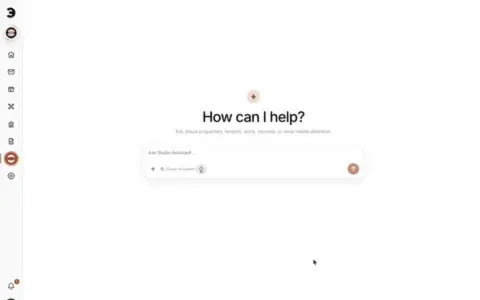
  • The assistant's start screen asking How can I help? above a question box.
    Ask it anything
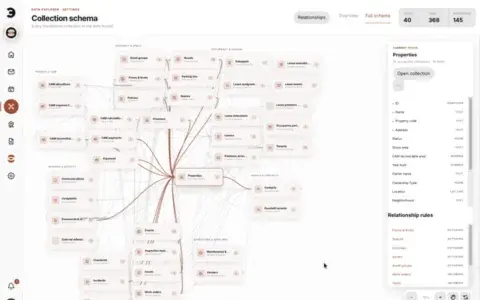
  • The data map: a network of connected record types.
    How the records connect
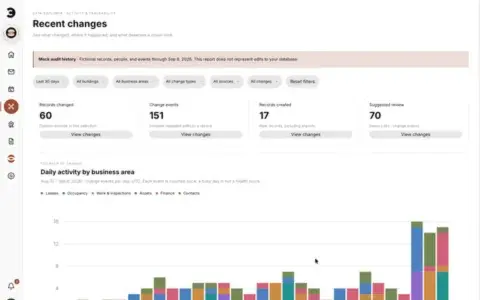
  • A recent changes report with totals and a daily bar chart of updates by business area.
    Every change, traced
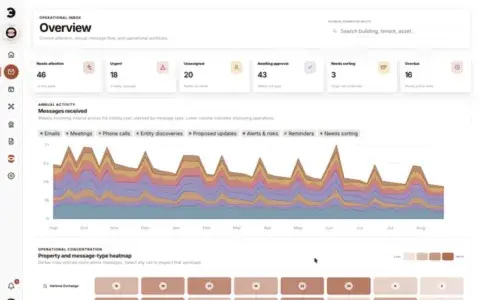
  • An overview dashboard with workload totals, a year of incoming messages as a stacked chart, and a heatmap.
    What's waiting, at a glance

02Case studyProperty management company

A connected view of properties, people and work.

Property management depends on information scattered across contracts, units, service requests, tasks, communications, vendors and operational systems. Finding the full story behind a property or issue can require piecing together information from several different places.

Colour and Code created an AI assistant that brings those sources together into one interactive knowledge and operations layer. Staff can ask questions conversationally, understand the context around a unit or request, retrieve relevant documents and communications, enrich records and see how information across the organization connects.

That gives employees more useful information at the moment they need it, helping them make better-informed decisions without spending their day hunting through systems. It also helps teams respond to tenants, property owners and service partners with greater context and continuity.

  • Answers questions conversationally
  • Shows the context around a unit or request
  • Retrieves the right documents and communications
  • Enriches records and shows how they connect

By taking on more of the searching, organizing and administrative work, AI gives people more time for the human side of property management: solving problems, communicating clearly and building stronger relationships.

Inside the system

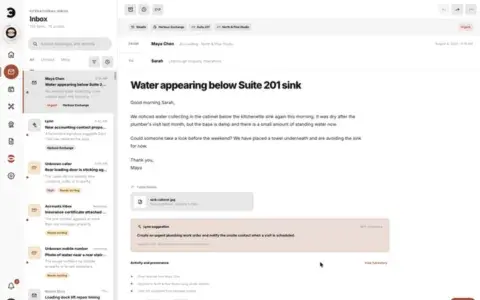
  • The inbox: a tenant's message matched to a unit and building, with the assistant's suggested next step for someone to approve.
    A message matched to its unit
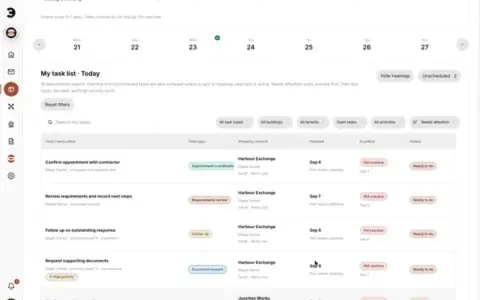
  • A task list for the week: each task with its type, property, planned date, deadline and status.
    The week's tasks, by property
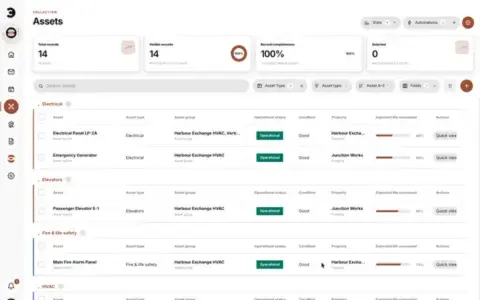
  • A list of building assets grouped by type, with operational status, condition and expected life.
    Building assets and their condition
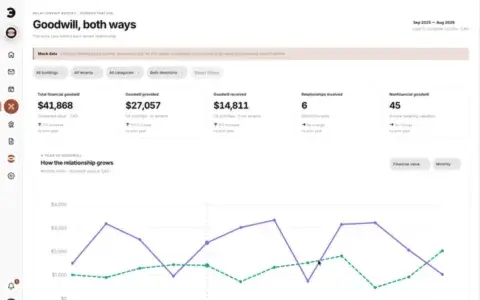
  • A relationship report with value totals and a line chart comparing two directions over a year.
    Goodwill with tenants, both ways
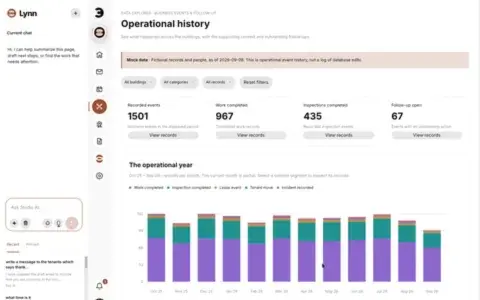
  • An operational history report with the assistant open in a side panel.
    The assistant beside a report

Yours would be described the same way: by what it does, not by what it's called.

Tell us about your business

proof:

Brands we have elevated.

Municipal, healthcare, automotive, hospitality and professional services, across the Kawartha Lakes and beyond.

All our clients
  • City of Kawartha Lakes
  • McDonald's
  • Kawartha Honda
  • Race Toyota
  • Ross Memorial Hospital
  • Ampere
  • Spencer West
  • Kawartha Land Trust
The Colour and Code team, together in the studio.

The people on the other end of the decision.

Colour and Code, Kawartha Lakes