Strategy
Marketing strategy that turns attention into action.
Practical, story-led marketing plans that connect audience insight, messaging, campaign structure and measurable outcomes.
Not a list of content ideas. A plan your team can run on Monday.
Who leads this work
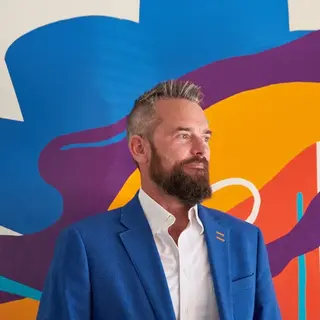
- Tod Ward President
clients:
Who we plan for.
Organizations we have built marketing and strategy work with.
Every client since 2009










what it is:
A set of decisions, not a list of ideas.
Content calendars and ad campaigns are the output. The strategy is what comes first: who you need to reach, what they need to believe, what is quietly stopping them, and what order things have to happen in. We answer that in discovery, and everything after is downstream of it.
-
Audience segments
Who the work has to reach, grouped by something that actually predicts behaviour.
-
Marketing goals
What the marketing is for, written so you can tell afterwards whether it worked.
-
Opportunity analysis
Strengths, openings and threats, set down plainly. A plan needs an honest starting position.
-
Barriers to action
What stops people converting. Cost, mistrust, confusion, timing, or not knowing you exist.
-
Brand themes
The handful of ideas the work keeps returning to, whatever the channel.
-
Voice and tone
How it should sound, and just as importantly how it should never sound.
-
Message priorities
What has to be said first, and what can wait until someone is listening.
audience and message:
Built on behaviour, not demographics.
Age and postal code rarely explain why someone acts. We build segments around what a group genuinely has in common, which is usually something else: a role, a place, something they own, the influence they carry, or how ready they are to move. Where a group cannot honestly be drawn as a persona, we say so rather than invent one.
Then we decide how it should sound, and write it down, so everyone producing work stays in the same register months later.
Scroll sideways to read it all.
-
Message pillars
The two or three things that have to land, whichever single piece of the campaign someone happens to see.
-
Themes and storytelling
The recurring ideas that hold a campaign together across channels and months.
-
Tone to use, tone to avoid
Two lists. Hopeful and collaborative, say, rather than alarming and accusatory. The second list is what stops well-meaning work going wrong.
the framework:
People rarely go from unaware to committed in one step.
Instead of a generic funnel we map the sequence of trust someone actually travels, and decide what each stage is responsible for. Every piece of the campaign then has a job and a place to sit.
-
first contact
Generate awareness.
Become known to people with no particular reason to know you yet.
-
credibility
Establish trust.
Show the track record and the people. Trust cannot be claimed in a headline.
-
clarity
Provide useful information.
Answer what is actually holding someone back, where they are looking.
-
the small ask
Inspire action.
Ask for something small and worth doing before asking for something large.
-
the decision
Confirm commitment.
Make the next step obvious and remove the friction that loses people at the end.
-
after the yes
Build the relationship.
Keep the people who said yes. They are the proof the next campaign needs.
Naming the stages separately is what stops a campaign asking for commitment from people who have not heard of you.
the sequence:
Campaigns that build on each other.
One campaign rarely moves anyone the whole way, so we plan a run where each does a job the next depends on. For every one we define the goal, the audience, the core message, the channels, what the landing page has to do, the creative direction, the calls to action and the KPIs, before anything is made.
-
campaign one
Build recognition.
Establish the awareness everything after it depends on. You cannot ask a stranger for a commitment, and a brand nobody can recall cannot be trusted yet.
-
campaign two
Invite a small action.
Turn recognition into taking part, with an ask that costs almost nothing and is genuinely worth doing. Small collective actions are what make a movement visible to the people still deciding.
-
campaign three
Show the work, then ask.
Prove the promise with evidence rather than adjectives, and make the real decision easy for the people already paying attention.
Three is the usual shape, not a rule. See the three we planned for a land trust.
after the click:
The path after the click is part of the campaign.
An advertisement that works and a page that does not is a campaign failing quietly. We plan the landing page alongside the campaign, around the promise the advertisement just made, and we tag every route in so you can tell which message brought which person.
-
Pages, forms and follow-up
A page per campaign or segment, asking for the least you need at the moment someone is most willing to give it, and what happens in the days after.
-
Tagged and traceable
Every advertisement, post and newsletter gets its own link, so performance is attributed rather than guessed.
-
Measured against targets set first
Visits, clicks, submissions, participation and qualified leads, with success defined during planning rather than explained afterwards.
what you receive:
What actually lands on your desk.
A marketing strategy you can hand to a team, a board or a freelancer and have them know what to do with it. It suits nonprofits, tourism and service businesses, anyone launching something new, and teams with plenty of output and no sequence.
- Marketing strategy document
- Audience and persona analysis Messaging framework
- Campaign roadmap Channel recommendations
- Landing page and content recommendations KPI plan
- Campaign checklists Creative direction
Want to see the shape of one?
Start a strategy conversationcase study:
A community movement, planned in three campaigns.
Kawartha Land Trust protects ecologically important land across the Kawarthas, and had done so for two decades. Their own assessment of the problem was blunt: no one knows we exist. The barriers to a landowner protecting their land were not really about the land at all. They were cost, not knowing the options, and not yet trusting anyone enough to ask.
So we wrote a marketing plan built on trust rather than a funnel. Two audiences: landowners inside the boundary, and the wider community around them who could not donate land but could influence someone who could. Themes and tone were set before any creative, hopeful and collaborative rather than alarming, because conservation messaging fails when it frightens people.
What is shown here is the plan as delivered: audiences, framework, three campaigns, landing pages, schedule and checklists. We have not published results against it, so there are none quoted.
-
Save it for Them
An awareness campaign to reintroduce the organization and make its work recallable, with a line that carried two meanings at once.
-
Land Love Notes
An invitation to write a short note to a place you love, collected and shown publicly. A small action, asked for only once recognition existed.
-
Protect This Neighbourhood
Signs in the specific areas being protected, each pointing to a page written about that neighbourhood. Proof you could stand in front of.
Ready to make your marketing more intentional?
Tell us what you are trying to move and who has to move. We will tell you what a strategy would need to cover.